Saturday, August 15, 2015

India celebrates 69th Independence Day 2015


 A tribute to simplicity and honesty

Today, 15 August 2015, India celebrates its 69th Independence day. It is a memorable day not for India alone but for the world at large as it marked the beginning of the end of colonial rule all over the world as well.

This year it is of special significance as Indians pays tribute to one of the most brilliant and illustrious citizen in recent times, the late Avul Pakir Jainulabdeen Dr.Abdul Kalam, the 11 President of the republic who passed away on 27 July 2015.Dr.APJ Abdul Kalam was top scientist but was known for his simplicity, honesty and high integrity and was highly respected and loved by millions within and outside India.

After his death and just before their Independence Day, Public TV announced that the wealth of the late president as follows:

1) 3 Pants
2) 6 shirts
3) 3 suits
4) 1 watch
5) 2500 books
6) No TV, AC or CAR
7) 1 Bangalore Flat handed over to scientists community long time.                                                               
 8) Zero bank balance                                                                                                                          

It is gratifying to note that at a time when simplicity and honesty are ignored, India chose to honor an extremely simple and honest man on such an auspicious day.

Below is one of most memorable quotes which he delivered at a speech at the European parliament:     
               
"Where there is righteousness in the heart, there is beauty in the character. When there is beauty in the character, there is harmony in the home. When there is harmony in the home, there is order in the nation. When there is order in the nation there is peace in the world".

As a mark of respect this small but extraordinary man, I submit this short story about him which I came across in my reading and a video tribute of the man who I admire greatly.

 
How Wealthy was the APJ Abdul Kalam in terms of Material


APJ Abdul Kalam has left an indelible mark on the hearts and minds of Indians in a manner few other public figures have in recent memory. In death he achieved the kind of acclaim in people’s hearts that politicians covet but may never come close to attaining.

In material terms, the “People’s President”, it now transpires, owned precious little, save his 2,500 books, a wrist watch, six shirts, four trousers, three suits and a pair of shoes. Kalam did not own any property nor a fridge, TV, car or an air conditioner. This for a man who spent over five decades in public service, including his stint as President of the Republic.

He did not die in penury, but neither did he live a life of luxury. He survived on the royalty from his books – he authored four of them – and his pension. The exact amount of his life savings is not known. “It wasn’t much to write home about,” said Sheridan, his secretary for over two decades.

After he demitted office, the government allotted him a bungalow at 10 Rajaji Marg. The two-storey house lies desolate today but tales of his integrity are still alive. He was firm about not receiving any personal gifts and ensured that all personal gifts were duly tabulated and sent to the government’s toshakhana.

“He would never accept a gift, save a book, and whenever somebody brought him a packed gift and tried to pass it off as a book, he insisted on examining what was inside. Anything other than the book was politely returned,” says his former media advisor SM Khan.

Kalam’s love for technology is well known and he kept himself abreast of the latest developments mainly through radio. “He did not have a television set in his living quarters. He got his news either from radio or newspapers. The only TV set at his Rajaji Marg residence was used by his staff,” Khan said.

Khan recalled how the former President revered his elder brother, who is 99 years old. Kalam held his elder brother APJ Marakia in great esteem and was full of plans to celebrate his brother’s 100th birthday next year. “One of the things that gave him (Kalam) immense joy was when he helped his brother get access to 24-hour power supply by installing a solar panel at their ancestral home,” says Sheridan, adding, “President Kalam would always call him (his brother) before leaving or returning from an important lecture assignment. He had called him the day before leaving for Shillong.”

“The lives of great men remind us, we can make our lives sublime, and, departing, leave behind us, footprints on the sands of time.” Former president APJ Abdul Kalam wasn’t around when Wordsworth wrote these lines. Had both the men belonged to the same age then these lines would have surely been written for Kalam.

Monday, August 10, 2015

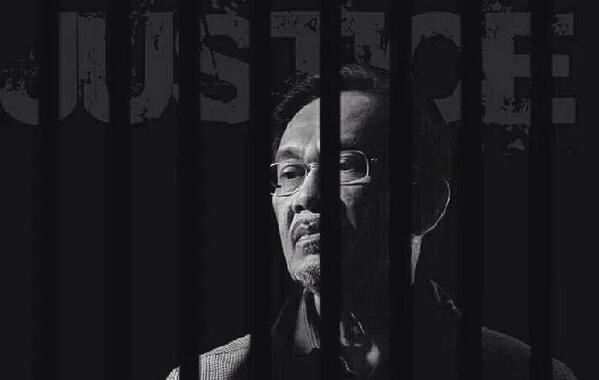
DSAI marks 68th birthday in prison


 Victory may be near at hand


Today Datuk Seri Anwar Ibrahim's 68 birthday and unfortunately he celebrates it in prison. He has been in jail for the last 182 days, since 10 February 2015.

Despite his incarceration in jail at the age of 68 and with major medical ailments, he has still not given up his fight against what he strongly believes in - against corruption, injustice and abuse of power. After 182 days of solitary confinement, he remains strong and determined to fight on, a battle that many felt may be futile. However the recent political developments in the country gives some hope that his fight may finally bear fruits.

He could have taken the easy way out and spend his last days happily with his family in the comforts of his home but he chose to go to prison instead in defense of his principles, a rare commodity especially among politicians today.

Anwar  may be behind bars but the flame he had ignited continues to burn even more ferociously outside. The people are awakened and are beginning to rise to fight corruption, abuse of power and injustice, the very evils he fought when he was outside.

As peace loving citizens we thank him for his courage and inspirations and may God bless him with the strength and good health to endure his ordeal. 


Happy birthday DSAI, please stay strong and healthy as victory is near.

Friday, August 07, 2015

The passing of a great statesman


The passing of a great statesman

Dr APJ Abdul Kalam was not a politician, but he was a true leader of men and a great success story. He was a poor kid who became a role model for leaders around the world.

THE VVIP walked to the stage to loud applause, flanked by the hosts. He passed the speaker’s podium. And stopped in his tracks. There, before him, were two rows of seats with a special chair in the centre for him, comfortable cushions and all.

The man flatly refused to move unless the chair was removed.
“Get me a chair just like the ­others,” he demanded.
The hosts were flustered. They rushed around before deciding to remove the comfortable chair and place one of the other chairs there instead.

Placated, the VVIP walked over, raised his hands to the crowd and sat. And the crowd rose as one to give Dr Avul Pakir Jainulabdeen Kalam (pic) a standing ovation.
Dr APJ Abdul Kalam, who died on July 27, was that kind of man – a humble leader who always consi­dered himself one of the millions of ordinary Indians.

He was no ordinary man, though. He has even been compared with Mahatma Gandhi, the man behind India’s independence and the great movement called satyagraha (passive resistance) and ahimsa (non-vio­lence).

Like Gandhi, he owned precious little but for most Indians of today, he was the most precious thing in the country. He was scientist, philosopher, poet, leader, teacher, medical researcher, missile man – and, above all, the People’s President.

When Dr Kalam was made president, he went into Rashtrapati Bhavan, the presidential palace, with two bags of clothes. Five years later, his tenure done, he left the palace – with the same two bags.
Aides tell of how he used to wear the same few coats and shirts – some were frayed – although he was asked to buy new ones.

To his death, he owned little. He had some 2,500 books, a wristwatch, six shirts, four trousers, three suits and a pair of shoes. He did not own property. Not even a fridge, TV, car or air conditioner.
He survived on the royalties from his books – he authored four of them – and his pension.
He did not believe in accepting money from anyone. And his penchant was in driving this message home to the youths of India.

“If you know your father bought that car with money that he did not rightfully earn, tell him that you will never sit in the car. And stick to your words,” he said.

He wanted them to walk or cycle rather than ride in a car bought with ill-gotten wealth.
He said if society was to be fighting corruption, there were three key people who could make it happen – the father, the mother and the teacher. And he was the teacher.

He told youths to dream, not idle dreams, but dreams that would come true. Dreams, he said, are not what you see when you are asleep. They are what keep you from sleeping.

He was a devout Muslim – the son of an imam – but also a man who embraced all religions.
Born in Rameshwaram, an island in the southernmost tip of India, he grew up with the famed Ramanatha Swami temple towering over him. His best friend was Ramananda Shashtri, the son of a Hindu priest.

For great men, he said, religion was a way of making friends.
“Small people make religion a fighting tool,” he said.
And he lived up to his doctrine.

During his visit to Malaysia, he walked the street of harmony – Jalan Kapitan Keling – in Penang. At St George’s Church, he stood in front of the cross and recited a prayer. At the Kuan Yin temple down the road, he prayed with joss sticks in his palms. Then, he walked over to the Sri Mahamariamman Temple where he paid his respects.

As he stepped out to loud Indian traditional music, the crowd mobbed him. He took the mike and told the crowd in his native Tamil language to recite after him his favourite mantra. And, with a fervour seldom seen there, they chanted:

If there is righteousness in the heart, there is beauty in the character;
If there is beauty in the character, there is harmony in the home;
If there is harmony in the home, there is order in the nation;
If there is order in the nation, there is peace in the world.

Then, it was over to the Kapitan Kling mosque where he was ­greeted by the imam. He planted a tree – tree-planting to stop global warming was another great drive of his – and then joined a congregation of fellow Muslims in zohor prayers.

It was a lesson in harmony, on Harmony Street.

He may have been the man behind India’s killing machines, its rockets and bombs. But he was a man who loved every soul as his own. The only sad thing is: he was never an elected leader, one who could have made a difference in politics and policies. He was just a titular head of state.
But Dr Kalam died every inch a statesman, and as a role model for those in public life throughout the world. Even in death, he left a ­memorable legacy. Don’t declare a holiday on my death, he said.
“If you want to remember me, work an extra day,” he said.

In Jaipur, not only did they not have holiday on the day he died, all civil servants came back to work last Sunday to honour his words.

Dr Kalam may not have wanted a holiday upon his death but there are days for him. In Switzerland, May 26 – the day he visited the country – is World Science Day. And his birthday on Oct 15 is World Students Day. He was a teacher to his last breath.

The views expressed are entirely the writer’s own.


http://www.thestar.com.my/Opinion/Columnists/Why-Not/Profile/Articles/2015/08/07/The-passing-of-a-great-statesman-Dr-APJ-Abdul-Kalam-was-not-a-politician-but-he-was-a-true-leader-of/


 Comments

At a time when we are witnessing super mega corruption scandals among top political leaders involving multi-billion dollars,it is hard to believe we had such a simple and noble man in the Indian Presidential Palace,Rashtrapati Bhavan.
.
He was so simple and honest that his subordinates could not understand him and at times were left confused and puzzled,not knowing how to treat him as their coveted national President


He went into Rashtrapati Bhavan, the presidential palace, with two bags of clothes. Five years later, his tenure done, he left the palace – with the same two bags.

That was the small but great man,Dr.Abdul Kalam,the 11th president of India who earned the the love and admiration of his people and was fondly called " The People's' President". Generations to come will find hard to believe that such a simple man ever sat on the most coveted chair of the highest position in India.

Friday, July 31, 2015

Abdul Kalam passes away


The passing of a ‘little giant’


Former Indian President and scientist, Dr.Abdul Kalam has been laid to rest in the humble surroundings of his hometown, Rameswaram in India. His end was as humble as his beginning.

He started his life as a poor newspaper boy, helping to supplement the family income. Despite his impoverished life as a young man, he showed tremendous passion in his studies which with his with hard work took him to greater heights as a scientist and later as the 11th President of India.

He is one of the great men who did not forget his past but took great pride of his humble beginnings. He did not forget his parents and early teachers whom he credited for his success. After willingly leaving his presidency he went back to his simple old life, inspiring the youth to work hard for uplifting his country to a developed.

His message to the youth, whom he had special interest, was nothing but hard work and good values. This can be summarized into the following 4 steps, 1.Have a dream 2.Acquire knowledge 3.Hard work and 4.perseverance.  

Abdul Kalam may have left us but will continue to live in our hearts for a very long time. He has left footprints in our lives that will be hard to erase. He might have been a little man in stature but a giant at heart and will.

May he rest in peace

Friday, June 19, 2015

Father’s day 2015 – Children dad’s greatest pride

One of the greatest wishes of a father is for his children to grow up to become successful and useful citizens well respected in society. This was what my late father used to tell me when I was young. He was not formally educated, rich or powerful but he wanted to be the proud father of his children whom he brought up in his own unique ways to achieve that aim. He used to say that making a father proud should be an important duty of every child. 

At that time what he said did not mean much to me but now being a father myself, I understand his wisdom behind those words. We work hard our whole life for happiness the but real happiness during the final days depend so much not on the wealth we have accumulated but more on what the children and to some extent the grandchildren do. It is taking pride in what they are and do that brings joy. Well, I tried to do my utmost to live up to the expectations of my father and I hope my children too will do their part to make me proud of them.

Another great wish of a father is the company of his children during the final days of his life. This is due to the fear of loneliness they experience at their advanced age. However tough, authoritarian or even tyrannical they might been during the prime of their lives, fathers when they grow old are extremely fearful of loneliness. They tend cling onto their wives and if their wives are not there then then they cling to their children for company. Many children consider this a nuisance and may send them to old folk’s homes.

This brings my thoughts to an elderly gentleman who I befriended some years ago. He was in his   eighties and was all alone after the death of his wife. His only son was away doing some job overseas. The old man narrated his fear of being all alone and badly longed for the company of his son. He said that his only wish at that time was that his son would be back and be around when he died. Nothing bothered him more than the fear that his son will not be around when he died. Fortunately his prayers were answered as a year later his son was back with him during the final days before he died peacefully. 

As we celebrate this Father’s day it may be pertinent for us to reflect on how we are fulfilling these two important wishes of our own fathers. If we haven’t then it may be timely to do so. If our dads are already dead, we can still ponder on whether we fulfilled those two wishes when they were alive – making them proud to be our father and allay their fear of loneliness before their death. If we had I am sure we will feel a sense of satisfaction and happiness deep within us, a happiness that no money can buy.

It is said that God made paradise at the feet of your mother but He made the father take care of the thorns under your feet. Yes, it is the father who takes pain to prevent your feet being pricked by the thorns because he feels the pain more if they do.

On this Father’s Day too let’s pay tribute to this special man in our lives, the man who toiled for our success, suffered in silence and holding back tears when we failed, did everything within his means to lift us up every time we fell and took great pains to prevent us from falling again. He is the only person in the world who takes pride when we overtake him in success, wealth and status. He is none other our dad.

The greatest happiness for a father is being proud of what his children do. The question we have to ask ourselves this Father’s day is whether we are making our dads proud.

 Happy Father’s day


CNY - Year of the dragon

Happy Chinese New Year to all, in particular the Chinese members of our bigger Malaysian family.May this Year of the Dragon bring peace ...